

Completing your orthodontic treatment is a significant milestone, and we share in your excitement about your beautiful new smile. You’ve invested time and dedication to achieve this result, and the journey doesn’t end the day your braces come off. The next crucial phase begins: retention. At Baker Orthodontics, we want to ensure your results last a lifetime. This is where orthodontic retainers play a vital role.
Understanding the importance of retainers is key to protecting your investment and maintaining the smile you’ve worked so hard for. This post will explain why retainers are a non-negotiable part of your post-treatment care. We will explore how teeth can shift, the different types of retainers available, and what you can expect during this final, essential stage of your orthodontic journey.
The Science of a Straight Smile: Why Teeth Move
Your teeth are not fixed rigidly into your jawbone. They are held in place by a network of fibers called the periodontal ligament, which allows for slight movement. This flexibility is what enables orthodontic appliances like braces and clear aligners to guide your teeth into their ideal positions. However, this same flexibility means your teeth have a natural tendency to move back toward their original locations once the active pressure from your treatment is removed. This phenomenon is known as orthodontic relapse.
Several factors contribute to the potential for teeth to shift after treatment:
- Periodontal Ligament Memory: These ligaments have an "elastic memory." After being stretched and repositioned during your treatment, they will try to pull your teeth back into their old alignment. Consistent retainer wear is necessary to counteract this force and allow the bone and ligaments to remodel and stabilize around the new tooth positions.
- Continued Growth: For our younger patients, the jaw continues to grow and change, even after orthodontic treatment is complete. These subtle changes can influence tooth alignment over time. Wearing a retainer helps accommodate this natural development while preserving your corrected bite.
- Forces of Daily Life: Everyday functions like chewing, swallowing, and even speaking exert constant, gentle pressure on your teeth. Over months and years, these forces can contribute to gradual shifting. A retainer acts as a safeguard, holding your teeth firmly in their corrected alignment against these daily pressures.
Without the consistent use of a retainer, all the progress made during your treatment is at risk. We are committed to helping you maintain your results, and that starts with a clear understanding of why this final phase is so critical.
Types of Orthodontic Retainers
To meet the unique needs of every patient, we offer several types of orthodontic retainers. Each is designed to effectively hold your teeth in place, and we will work with you to determine the best option for your specific situation. Our tailored treatment plans extend to this retention phase, ensuring the personalized attention you deserve.
The two main categories of retainers are removable and fixed.
Removable Retainers
As the name suggests, these retainers can be taken in and out of your mouth. They are the most common type prescribed after orthodontic treatment.
- Hawley Retainers: This is a traditional and highly durable type of retainer. It consists of a custom-molded acrylic plate that fits snugly against the roof of your mouth (for an upper retainer) or along the inside of your lower teeth. A thin metal wire runs across the front of your teeth, holding them in position. Hawley retainers are adjustable, allowing us to make minor corrections if needed.
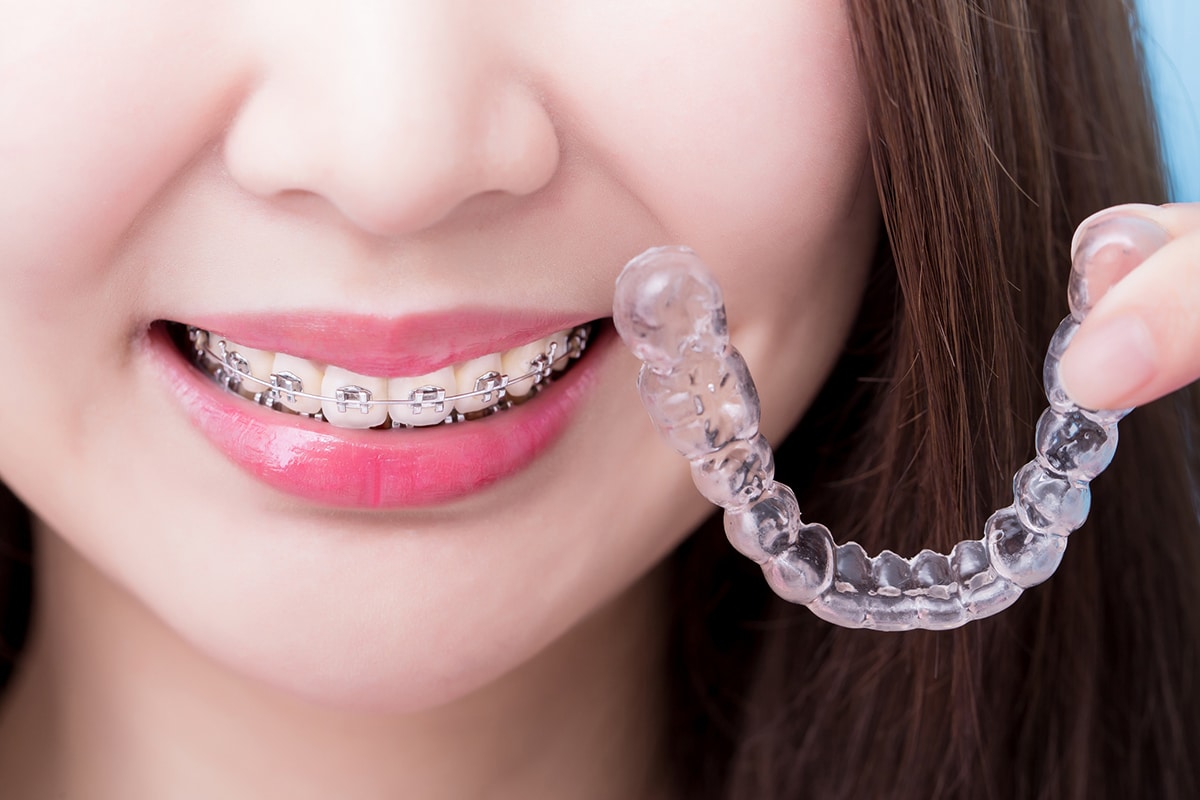
- Clear Retainers (Essix): These retainers look very similar to clear aligners like Invisalign. They are transparent, vacuum-formed plastic trays that fit perfectly over your teeth. Their discreet appearance makes them a popular choice for many patients. While highly effective, they may need to be replaced more often than Hawley retainers, especially if you grind your teeth.
Fixed Retainers
A fixed retainer, also known as a bonded or permanent retainer, consists of a thin, solid or braided wire that is bonded to the back (tongue-side) of your front teeth.
- Permanent Lingual Wire: This type of retainer is most often used for the lower front teeth, as they are the most prone to shifting. Because it is permanently attached, you never have to worry about forgetting to wear it or losing it. It provides constant retention and is completely invisible to others. Proper oral hygiene is crucial with a fixed retainer, requiring diligent brushing and flossing to clean around the wire and prevent plaque buildup.
At your final appointment, we will discuss the advantages of each type and recommend the one best suited to preserve your new smile.
Your Retention Schedule: A Lifelong Commitment
We believe in clear communication and setting expectations from the start. When you receive your retainer, we will provide you with a precise wear schedule. While this can vary based on individual needs, a typical retention plan looks something like this:
- Initial Full-Time Wear: For the first few months after your braces are removed, you will likely be instructed to wear your removable retainer full-time, only taking it out to eat, drink, brush, and floss. This intensive period is critical for allowing the bone and surrounding tissues to solidify around your teeth's new positions.
- Transition to Nightly Wear: After the initial stabilization period, you will typically transition to wearing your retainer only at night while you sleep. This phase continues the stabilization process while giving you more freedom during the day.
- Long-Term Maintenance: To ensure your smile remains perfect for a lifetime, we recommend wearing your retainer a few nights per week indefinitely. Think of it as long-term insurance for your smile. This minimal effort prevents gradual, unwanted shifting that can occur over many years.
Adhering to this schedule is the single most important thing you can do to protect your orthodontic investment.
Caring for Your Retainer
Proper care will ensure your retainer remains effective, hygienic, and in good condition for as long as possible.
- Cleaning: Clean your retainer every day. For removable types, you can gently brush it with a soft-bristle toothbrush and cool water. Avoid hot water, which can warp the plastic. You can also use a specialized retainer cleaner. For fixed retainers, use a floss threader to clean between the wire and your teeth.
- Storage: When you are not wearing your removable retainer, always keep it in its protective case. This prevents it from being lost, damaged, or accidentally thrown away.
- Handling: Be gentle when inserting and removing your retainer. Never wrap it in a napkin when you eat, as this is the most common way retainers get lost.
If your retainer is lost or broken, please contact us immediately. The sooner we can get you a replacement, the lower the risk of your teeth shifting. Even a few days without a retainer can allow for movement.
Conclusion: Protecting Your Perfect Smile
Your orthodontic journey is a partnership between you and our team at Baker Orthodontics. We are committed to providing you with exceptional care from your first consultation to the final retention phase. Wearing your retainer as instructed is the final step in securing the beautiful, healthy smile you have achieved. It is a simple but powerful commitment to lifelong results.
We are here to support you every step of the way. If you have any questions about your retainers or your post-treatment care, please do not hesitate to reach out. Your long-term dental health and satisfaction are our highest priorities.
Frequently Asked Questions (FAQs)
What happens if I forget to wear my retainer?
If you miss one night, your retainer might feel tight when you put it back in. This tightness is a sign that your teeth have already started to shift slightly. If you go several days without wearing it and it no longer fits, contact us immediately. Do not try to force it into place.
How much do replacement retainers cost?
The cost of a replacement retainer can vary. It is far more cost-effective to care for your original retainer than to replace it or, in a worst-case scenario, require further orthodontic treatment to correct a relapse.
At Baker Orthodontics, we take pride in helping individuals and families achieve confident, healthy smiles that last a lifetime. Serving patients of all ages, our experienced team delivers personalized orthodontic care using the latest technology in a welcoming environment. If you have questions about your orthodontic journey or wish to begin treatment, please schedule an appointment with us today.